Understanding Economic Cycles: What the Housing Slowdown Signals for Recession-Ready Investors
A cooling housing market can be an early signal of economic contraction. Here is how investors can interpret the cycle and position portfolios defensively.
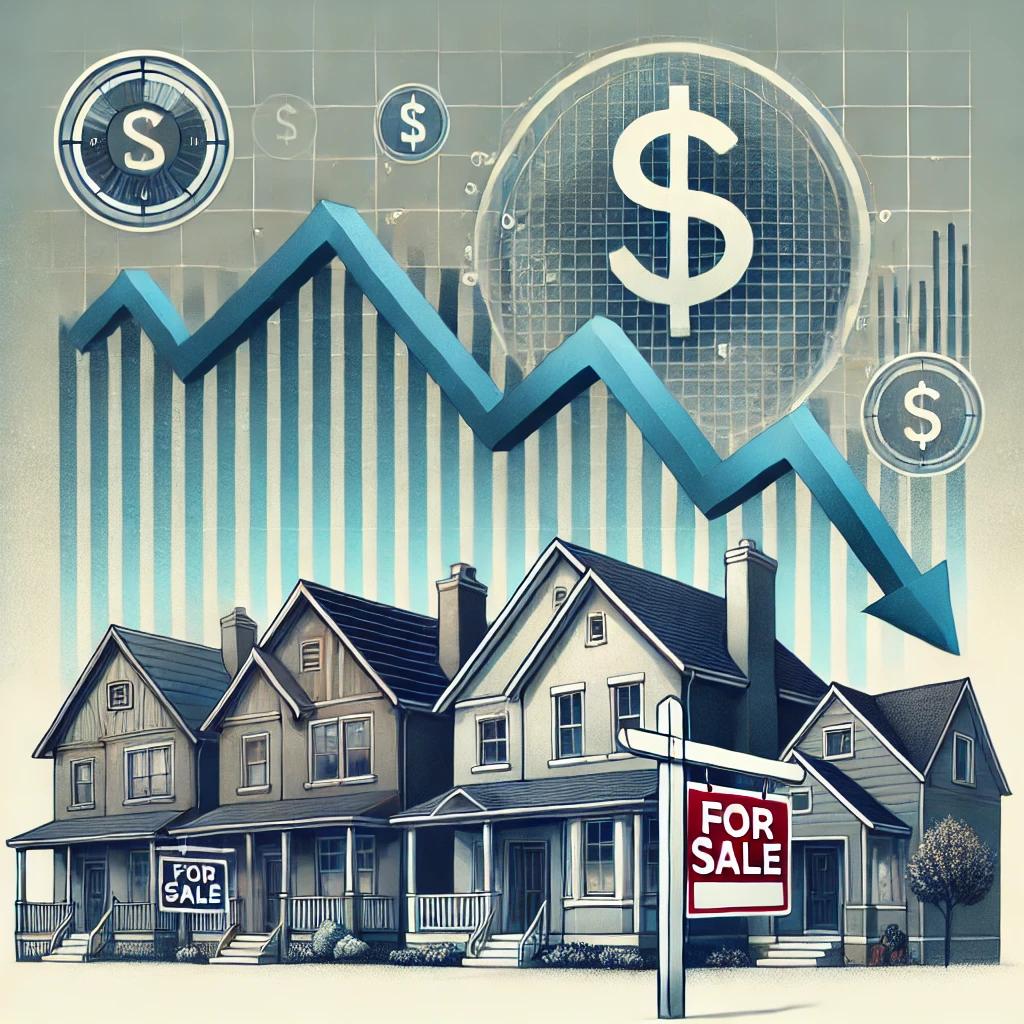
As economic headlines report slowdowns in the housing market, many investors are asking: What does this mean for the broader economy? Understanding economic cycles, and how sectors like housing act as early indicators, can help investors make recession-ready decisions.
The housing market has long served as a barometer of economic health. Recent shifts suggest we may be moving into a different phase of the cycle. But how should investors interpret these changes, and what strategies can help navigate a potential downturn? Let’s break it down.
What are economic cycles?
An economic cycle is the natural fluctuation of the economy between periods of expansion and contraction. These cycles typically progress through four stages:
- Expansion: Rising economic activity, low unemployment, and increasing consumer spending.
- Peak: The economy reaches its highest growth rate, often accompanied by inflation and increased borrowing.
- Contraction (recession): Economic activity slows, unemployment may rise, and consumer spending typically decreases.
- Trough: The lowest point in the cycle, after which the economy begins to recover.
Knowing where we sit in the cycle helps investors decide whether to take a cautious or aggressive approach.
Why the housing market matters
Housing is sensitive to interest rates and consumer confidence. As mortgage rates rise, demand for homes typically decreases, leading to slower sales and softening prices.
When housing begins to slow, it can signal a shift from peak to contraction. This does not guarantee a recession, but it is often a prompt to review portfolio strategies.
Key indicators of a housing slowdown
- Rising mortgage rates: Higher borrowing costs reduce demand for home purchases.
- Decreasing home sales: Lower transaction volume signals cooling demand.
- Stagnant or declining prices: A softer market indicates reduced competition and buyer caution.
Each of these indicators can act as an early warning signal that the economy may be entering a contraction phase.
What a housing slowdown means for investors
A cooling housing market can impact more than real estate. It often triggers a broader shift toward defensive positioning.
Defensive sectors and stable assets
Utilities, healthcare, and consumer staples provide essential goods and services and tend to be more resilient during downturns. Shifting some exposure toward these areas can stabilize portfolios when other sectors struggle.
Fixed income and bonds
When the economy slows, investors often seek stability in fixed income. Bonds tend to perform well when interest rates stabilize or fall, providing a buffer against equity volatility.
Real estate investment trusts (REITs)
Not all real estate is impacted equally. REITs focused on healthcare facilities, warehouses, or data centers can generate steady cash flow even during housing slowdowns.
Commodities and precious metals
Gold and silver are often treated as safe havens during economic uncertainty. A modest allocation can hedge against market volatility.
Strategies for recession-ready investors
Focus on quality and fundamentals
Companies with strong balance sheets, consistent cash flow, and manageable debt tend to fare better during downturns. Quality fundamentals matter more when growth slows.
Consider dollar-cost averaging
Investing a fixed amount on a regular schedule can smooth volatility. DCA helps avoid timing mistakes and positions investors to buy at lower prices during market stress.
Diversify across asset classes
Diversification across stocks, bonds, and commodities reduces the risk of large drawdowns. Gains in one asset class can offset losses in another.
Looking forward: the big picture
Housing slowdowns are part of normal economic cycles. Recessions help rebalance growth and manage inflation. Investors who prepare in advance and stay disciplined are better positioned to weather downturns and capture opportunities when the economy recovers.
Bottom line
A housing slowdown is often an early indicator that the economy may be moving into contraction. For recession-ready investors, this is not a reason for panic, but a signal to review and strengthen portfolio strategy.
By focusing on defensive sectors, diversifying assets, and staying informed, long-term investors can navigate economic cycles with confidence and resilience.